
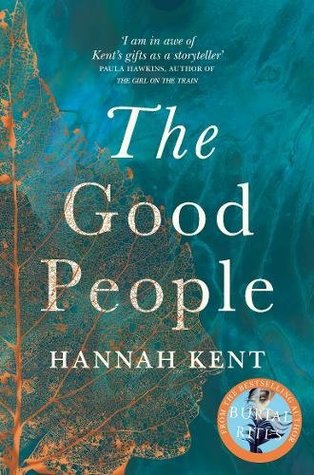
Pages: 380
Published: 27th September 2016
Genre: Historical fiction
Content warnings: Child death, stillbirth
Nóra, bereft after the sudden death of her beloved husband, finds herself alone and caring for her young grandson Micheál. Micheál cannot speak and cannot walk and Nóra is desperate to know what is wrong with him. What happened to the healthy, happy grandson she met when her daughter was still alive?
Mary arrives in the valley to help Nóra just as the whispers are spreading: the stories of unexplained misfortunes, of illnesses, and the rumours that Micheál is a changeling child who is bringing bad luck to the valley.
Nance’s knowledge keeps her apart. To the new priest, she is a threat, but to the valley people she is a wanderer, a healer. Nance knows how to use the plants and berries of the woodland; she understands the magic in the old ways. And she might be able to help Micheál.
As these three women are drawn together in the hope of restoring Micheál, their world of folklore and belief, of ritual and stories, tightens around them. It will lead them down a dangerous path, and force them to question everything they have ever known.

There are plenty of things to admire in this book. Told with immense detail and containing an arresting mix of themes, it consumes you in an intriguing and atmospheric historic setting which the author completely succeeds in bringing to life. Had the writing not been so dense, it could have been a tremendously good read.
The story goes to great lengths to examine the fine lines between reality, faith, and folklore. I really enjoyed how contrasting attitudes are explored through characters that are drawn from different backgrounds, and was pleasantly surprised with how the plot developed in a way that shed some very interesting light on the cultures that are depicted.
In a rural Irish community in 1825, middle-aged Nora Leahy is informed that her husband Martin has passed away suddenly, leaving her alone to care for her grandson Micheal. It is apparent that Micheal is not a natural child; at four years old he is unable to walk or talk, and he soon becomes the subject of gossip among the neighbourhood.
Nora takes on a young woman called Mary to act as her maid and to help look after Micheal, but eventually she becomes convinced the boy is not Micheal at all, but in fact a fairy that has been substituted for her real grandson by the mysterious ‘Good People’. She then enlists the help of so-called local healer Nance Roche and her medieval methods to have him returned.
Each chapter is relatively long and the writing is entirely in the third person, mostly alternating between the lives of Nora and Nance, although occasionally it does focus on Mary. Due to the rural setting and the herbal remedies that Nance purveys, the chapters are entitled using the name of a particular plant, which then goes on to form part of the story.
I enjoyed these neat little touches, and also the way in which these main characters developed in accordance with the direction the story was taking. It is difficult to describe any of them as a main protagonist; instead this was very much a portrayal of three characters and their misguided beliefs.
While she is undoubtedly complex, I found it difficult to like Nora. She is beset by grief, but her assumptions lead her to commit serious acts of cruelty. Nance is given a lot of backstory and is evidently full of mystery, which made it interesting to see how she is seen by the other members of the community both as a figure of hope, but also as somebody worthy of condemnation.
Mary was the most compassionate character, which is what made me like her the most. The problem for me is that there were too many other characters around and at times it was difficult to tell them all apart. For all the detail in here, I would have liked there to have been fewer sub-plots.
The same applies to the writing style, which is perhaps the main reason why I have not given the book a higher rating. Technically it is very strong and the fabulous dialogue provides the setting with that extra level of authenticity, but it just was not engaging enough for me. It was also a bit dense and I found it hard not to skim read certain passages.
I certainly found it more gripping towards the end, where the story takes a new direction that I was not expecting, but ultimately really liked. There, the boundaries between reality and folklore are firmly established, and differences in social class and walks of life are well and truly highlighted. That was the one moment in the book where I clung to every word.
Overall, this a fascinating and thought-provoking read which immersed me in a very well realised historical setting. I was not so enamoured by the extremely slow pace and some other aspects of the writing, but it is clear that Hannah Kent has a precocious talent for conceptual literary storytelling.
Hannah Kent writes with a level of knowledge and sophistication that belies her relatively young age. Born in Adelaide in 1985, she developed an interest in Irish history and traditions, releasing her first novel Burial Rites in 2013. That won several prizes, including the Indie Awards Debut Fiction Book of the Year.
Published in 2016, The Good People was also shortlisted for a handful of awards, and has been translated into 10 languages. Kent is also the co-founder of Australian literary publication Kill Your Darlings.
An excellent and authentic portrayal of characters from a fascinating historical culture. I was impressed by the storytelling, but the slow pace and dense writing were not really my cup of tea.
My rating: ⭐⭐⭐

 Stephen Reads Books