
Pages: 327
Published: 16th February 2021
Genre: Historical Fiction
Content warnings: Strong sexual references, misogyny, allusions to rape

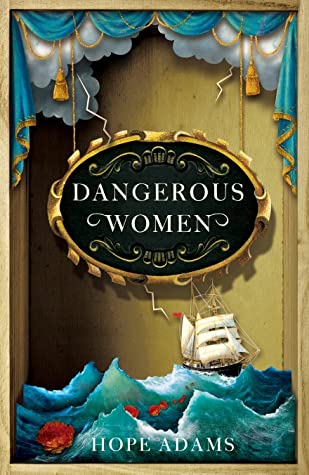
London, 1841. The Rajah sails for Australia. On board are 180 women convicted of petty crimes, sentenced to start a new life half way across the world. Daughters, sisters, mothers – they’ll never see home or family again. Despised and damned, all they have now is each other.
Until the murder. As the fearful hunt for a killer begins, everyone on board is a suspect. The investigation risks tearing their friendships apart . . . But if the killer isn’t found, could it cost them their last chance of freedom?

If you read the synopsis of this book and expect an intense, compelling mystery that will send you to the edge of your seat, then you will be sorely disappointed. Although it has its merits and can point towards a strong sense of historical context, any intrigue is lost amid a ponderous plot with a meagre amount of character development and an underwhelming resolution.
The story is inspired by real events and some of what we see reflects that, but here the mystery serves as the fictional element and it falls a long way short. Instead, the author’s main intention looks to have been to educate rather than entertain and while that does have its merits, the execution of it means we are left with something that rarely sparks into life.
It is 1841 and the ship known as the Raja is setting sail for Tasmania, carrying a large group of female prisoners; one of them a stowaway who has assumed a different identity. The matron Kezia Hayter enlists several of them in a project to sew a large quilt, which is to be presented when they arrive at their destination.
A few months into the voyage, a woman named Hattie is stabbed on deck and left for dead. Several of her fellow convicts immediately become suspects, and an investigation begins, led by the captain Charles Ferguson. Each woman is interrogated in turn by Ferguson, along with Kezia, physician James Donovan, and the resident clergyman Mr Davies.
None of the women can shed any light on what happened, and Kezia becomes frustrated when her attempts to speak up for them are not given due consideration. At the same time, she and Captain Ferguson grow close and Clara, still keeping her identity a secret, is also fearful that a connection to the stricken Hattie may be discovered.
The main themes in this book surround how the women are judged and the power of Kezia’s voice in comparison to the three men she is working with in the investigation. It touches upon what drove the women to commit the crimes for which they are being transported, along with the subjects of loss and same-sex relationships. Some of this is done very well, but ultimately it could all have been explored in a little more detail.
On the face of it the premise seems full of potential, but the plot is relatively mundane and moves at such a sedate pace that it never really gathers any momentum. The almost total lack of character development among the women renders the mystery quite uninteresting, rather than keeping you guessing or creating an increasing level of suspense, so that was disappointing.
Most of the book is written in the third person, switching the focus between the characters of Kezia and Hattie across two separate timelines, set before and after the stabbing incident. The timelines changed too frequently for my liking and neither was especially gripping, instead proving more of a commentary on day-to-day life on board the Raja.
The other chapters are in the first person from Clara’s point of view, and while her story is a powerful one that raises some meaningful moral questions, it felt like a bit of a missed opportunity. We know from early on that she is a suspect and is assuming a different name on the Raja, which was a great opportunity to add another layer to the mystery, but it never really makes much of an impression.
Of all the characters, Kezia was the most likeable, in part because she was given the most depth. She is strong and empathetic, never afraid to speak her mind and speak in defence of the women in the face of derision from the incredibly pompous Mr Davies. Her romance with Captain Ferguson was affectionately written, and he was shown to be a very decent and fair-minded person.
It is a shame that none of the suspects are developed very well. We get a limited sense of their personalities through the eyes of the three main characters, but in general they are rather difficult to tell apart and it means the moment when you find out who attacked Hattie does not carry the same significance as you might expect. Even then, the perpetrator’s motive seems slightly flawed.
The author clearly sets a lot of store by the historical context and that is probably the area where this book excels the most. It is written in a very matter-of-fact way which shows a lot of respect for the Raja and the work of the women in putting together the quilt, and the note at the end is an enlightening read.
Overall, for all of the historical context and how well it is conveyed, the mystery is meant to be the very centrepiece of this story and that falls extremely flat. The plot is devoid of suspense and it is hard to really care who attacked Hattie as the characters are barely fleshed out and the two timelines are not the most riveting. It falls a long way short of expectations.

Born in Jerusalem, Hope Adams spent her childhood in several different countries, including Nigeria and Indonesia. She now lives in Cambridge and has written books for adults and children under the name Adele Geras, including War Girls and Happily Ever After.
Dangerous Women was inspired by a trip to Australia, when she saw the Raja quilt on display in a museum.

I was hoping for a lot more from this book – the mystery was so underwhelming. On the bright side, it was a fairly quick and easy read.
My rating: ⭐⭐

 Stephen Reads Books