
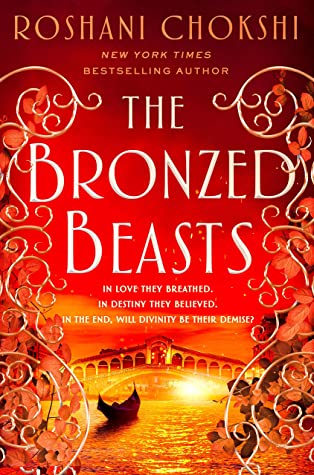
Pages: 400
Published: 21st September 2021
Genre: Young Adult Fantasy

After Séverin’s seeming betrayal, the crew is fractured. Armed with only a handful of hints, Enrique, Laila, Hypnos and Zofia must find their way through the snarled, haunted waterways of Venice, Italy to locate Séverin.
Meanwhile, Séverin must balance the deranged whims of the Patriarch of the Fallen House and discover the location of a temple beneath a plague island where the Divine Lyre can be played and all that he desires will come to pass.
With only ten days until Laila expires, the crew will face plague pits and deadly masquerades, unearthly songs and the shining steps of a temple whose powers might offer divinity itself…but at a price they may not be willing to pay.

This book represents a dynamic and thoroughly uplifting end to a trilogy that has vivid imagination and pure escapism at its heart. With its clever puzzles that evoke classical history, and a group of diverse characters who continue to beguile, it carries you on a scenic yet occasionally bittersweet ride, culminating in a highly satisfactory and fitting conclusion.
If the previous two books were somewhat character-driven, then this is on another level entirely. We see each of the protagonists dissected in such fine detail here, and the author knows all of their nuances so outstandingly well. Every one of them comes a long way in this final chapter and the overarching messages are clear to see, while the refinement in the writing makes the plot that runs alongside them equally absorbing.
It all takes place in a world which is artfully crafted and history is treated with great provenance and respect. Whereas this series has previously taken us on a tour of Paris and delivered an atmospheric yet intense story deep in the Ice Palace of Siberia, this one is primarily set in and around Venice and you can more or less sense the glorious architecture of it as you read. Even then, there is mythology from other parts of the world to be found along the way.
The plot is effectively split into two halves, with the first focusing on the immediate aftermath of the extraordinary sequence of events at the end of book two. Questions remain about Severin’s motives and he is estranged from his friends, still tempted by the idea of becoming a god despite the company he is now keeping. Then once they reunite, it is all about following the clues to find the salvation they are looking for and save Laila from her imminent death.
Throughout it all, the pacing is very relaxed with the focus generally on the path each character takes, but their familiarity, and the fact the writing is so stylish, keeps you fully invested. As the third person narrative switches between four of the protagonists, it is hard not to be swept along when they use their respective talents to unpick a clue on their way to Poveglia. At the same time, Laila’s ticking clock means there are always high stakes.
All of the characters are explored in sizeable depth here, but perhaps none more than Severin himself. Previously he came across as extremely shrewd with a hint of the morally grey, which we had seen a lot in the Ice Palace and his dabbles with godhood, but he truly ends up coming full-circle, becoming thoughtful and charitable here in equal measure as he looks to regain the trust of his friends.
His relationships with all of the others are interesting, but in particular Laila and Enrique, who start off in this book feeling betrayed, used, or both. The interactions Severin shares with Laila are mightily powerful and contain genuine feeling, so the way it ends between them is perfection, even if it is in many ways bittersweet. It could even be said that the spirit Laila has is the glue that holds this group of characters together.
Enrique continues to be adorable with his boundless enthusiasm for obscure history, while the sub-plot about trying to emerge from Severin’s shadow and proving his knowledge in the eyes of the others was well developed early on. The tentative romance he has with Zofia is the cutest thing ever, alongside the growing complexity of his feelings for Hypnos.
Even with her everlasting fondness for explosives and flammable materials, Zofia is just an absolute joy to read and was my favourite character right from the start of the series. That does not change here, and the way her neurodiversity is represented is stronger than ever. And although Hypnos does not get his own chapters, he and his extravagant ways are impossible not to love.
Ruslan may be ruthless, but he is the very definition of a moustache-twirling villain and that made him highly entertaining to read, and also somewhat compelling given the uneasy alliance he has with Severin and Eva in the first half of the story. Talking of Eva though, one disappointing thing was not getting any answers as to her eventual fate.
Given all the talk about gaining godly powers, the ending does a great job of turning that concept on its head; just one example of how the writing has a reassuring and even heartwarming quality. Some of it could be a little bit easier to follow, but there is no faulting the atmosphere of the settings, with the sacredness of the ziggurat a real highlight. It was great to return to L’Eden one final time, too.
Overall, many things about this book just make it a lovely way for a trilogy to end. The characters are integral to that and each of their arcs is handled with exceptional care, as they bring the authenticity and humour that commands the utmost affection – even Severin in the end. Three novels containing puzzles, nineteenth century European settings, and the art of Forging, and the best was saved until last.

I had held off from finishing this series for far too long, and now I regret it even more! This was an excellent read, which had the plot to go with the descriptive, atmospheric writing.
My rating: ⭐⭐⭐⭐

 Stephen Reads Books