
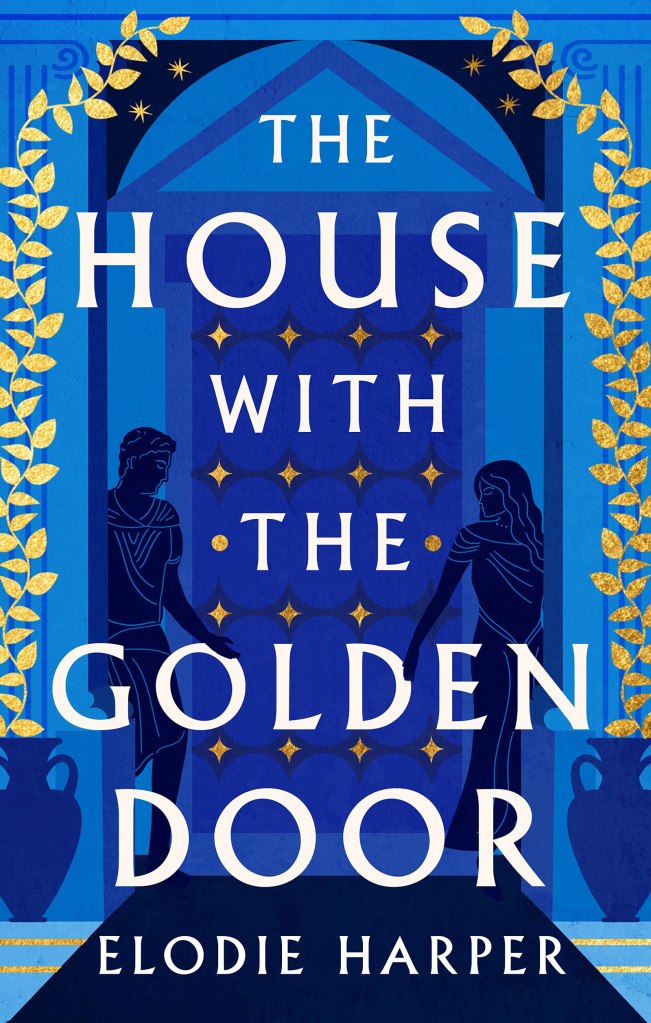
Pages: 486
Published: 12th May 2022
Genre: Historical Fiction
Content warnings: Sexual content, domestic abuse, misogyny

Amara has escaped her life as a slave in the town’s most notorious brothel, but now her existence depends on the affections of her a man she might not know as well as she once thought.
At night she dreams of the wolf den, still haunted by her past. Amara longs for the women she was forced to leave behind and worse, finds herself pursued by the man who once owned her. In order to be free, she will need to be as ruthless as he is.
Amara knows her existence in Pompeii is subject to Venus, the goddess of love. Yet finding love may prove to be the most dangerous act of all.

Just like its predecessor, this is a sequel that carries immense power and above all, perfectly captures a whole range of emotions with its compelling themes. Whereas before the focus was on survival and the fragility of one’s existence, this is an excellent portrayal of freedom, how precious it is to attain and how easily it can be taken away. As such, there remains jeopardy everywhere you go in this world, only now of a different kind.
With a setting that is again splendidly realised and characters who leap off the page with their vivid personalities, it pulls you back in straight away. The high stakes are there throughout especially as we witness the way Amara’s story evolves, and the risks that she takes. And despite the fact that parts of the plot are a little repetitive and the protagonists make some frustrating decisions, it is a vibrant, well written book that keeps you totally invested.
Not much time has passed from the end of The Wolf Den, but the beginning ushers in a brand new dynamic as Amara’s circumstances have changed for the better and she actually has some kind of status. This makes her more of an assertive character for one thing, but the way she interacts with other familiar faces such as Victoria, Fabia, and most notably Felix, has changed to reflect that.
There is still a sense that one wrong move will see her lose everything once more and her past life is never far away. The plot contains some very tense and sobering moments which definitely serve as the highlights, while the romance side of things drags it down a bit. It is not bad as a concept and no doubt adds to the air of trepidation, but it creates a set of back and forth dialogue scenes that are full of angst but lacking in substance or intrigue.
The relationship between Amara and Philos takes up a large amount of the story, but is arguably less interesting than the moments she shares with her former acquaintances. She may in theory have left Felix behind, but his presence in the background lurks menacingly and with the extra layer that arrives from Victoria’s tragically misguided faith in his good side, it is this that carries the most weight.
Victoria is a character with so many dimensions, going from coarse and light-hearted to vulnerable in a very short space of time. She is frustrating without question, but her unwillingness to accept Felix’s evil is heartbreaking and represents something that is sadly not confined to fiction. It is through this that her friendship with Amara is tested to the limit.
While Amara could hardly be described as submissive in the first book, she definitely comes across as more fiery and emotional here. It is clear that she never takes her freedom for granted and her sense of caution is palpable, but there is a rightful anger there that comes to the surface whenever confronted by Felix or anyone else who has wronged her. It is in these moments where you root for her the most.
As was the case with Victoria, it is good to spend time with characters who we got to know in the first book. Beronice is still a dreamer and the scene at the beginning where Amara is faced with an almost impossible choice gets the tension going straight away. It is wonderful to see Britannica get much more development, while Dido might be gone but the author makes sure she is absolutely not forgotten about.
There is also a continuation of the curious but strangely heartening friendship between Amara and Pliny, whose wisdom is in contrast with most of the other men in this book. We all know Felix is awful, but Rufus is a little more complex in terms of the unspoken hold he has over Amara. His sense of entitlement combined with the lack of real care he shows towards her is very much an echo of the time and society the characters are living in. Then we have Philos, who might be rather boring, but he is at least a good hearted guy.
The setting is really well brought to life once again, capturing the juxtaposition between privileged and poor in ancient Pompeii in impressively hard-hitting style. You are really made to feel like a part of the fabric in the unruly streets, but also in the more luxurious climes of Rufus’ house, where Amara is never allowed to feel too comfortable. The way it is written casts a light on both its vibrancy and its darkness.
After the first book ended in an extremely bittersweet way, the final act here is one of uncertainty as the situation Amara and Philos land themselves in reaches a pivotal moment. It leaves you a little worried about how things might play out for them in the last part of the trilogy, which seems to be heading on a collision course towards the eruption of Vesuvius…
Overall, this is an exquisitely written book that contains everything that made The Wolf Den so good and carries the narrative forward into intriguing territory. The relationship between Amara and Philos might not be the most enjoyable thing to read, but it still has its twists and turns to go with a strong overarching plot and characters who make a true lasting impression. It is the second step on the way to standout trilogy.

I enjoyed the first book slightly more than this one, but this was still a great read and I fell straight back into the world immediately. It is wonderfully written and the characters are so well drawn.
My rating: ⭐⭐⭐.5

 Stephen Reads Books