Pages: 446
Published: 18th April 2024
Genre: Historical Fiction
Content warnings: Misogyny, discrimination
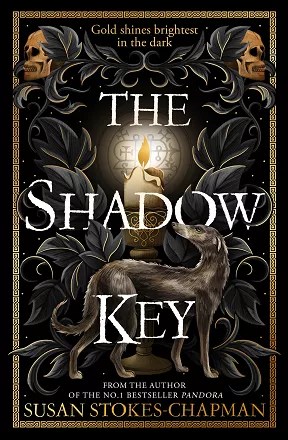
Meirionydd, 1783. Henry Talbot has been dismissed from his post at a prestigious London hospital. The only job he can find is as a physician in the backwaters of Wales where he can’t speak the language, belief in myth and magic is rife, and the villagers treat him with bewildering suspicion. When Henry discovers his predecessor died under mysterious circumstances, he is determined to find answers.
Linette Tresilian, the unconventional mistress of Plas Helyg, lives a lonely life. Her father is long dead, her mother haunted by demons which keep her locked away in her room, and her cousin treats her with cool disdain – she has had no choice but to become fiercely self-reliant.
Linette has always suspected something is not quite right in the village, but it is only through Henry’s investigations that the truth about those closest to her will come to light…a truth that will bind hers and Henry’s destinies together in ways neither thought possible.

This is an incredibly thoughtful and elegantly crafted novel that balances writing of the utmost refinement with an explosive plot containing a gradual array of eye-opening twists. From a setting with a profound sense of place to a set of intricate, interwoven storylines involving characters who are afforded oceans of depth, it packs a lot in – all accompanied by an atmosphere which screams Gothic in every possible way.
Certain facets of this book can be fairly described as creative writing at its finest. Every little detail has been subject to the author’s meticulous research and it truly shows, as the time period and the area in which it is set is portrayed in such an authentic way that you feel utterly transported to that very tiny corner of North Wales itself. The pacing, while some may see it as a bit slow, is expertly handled, giving the story ample opportunity to breathe before moving through the gears.
The ideas and concepts on show here are, in turn, phenomenal. These are intelligent and rather scholarly in their presentation, which match the whole aesthetic of a book that is told across four branches and has the very deliberate look of a tome you might find in an ancient academic library. We discover a world of hidden languages and symbols; antiques with mysterious origins; lethal poisons and strange superstitions, and their role in the story is significant yet never overdone.
Although admittedly it is not unputdownable as the story is at times intellectually challenging, the moderate plot is a major asset that can sometimes lull the reader into a false sense of security. In the opening chapters where the author lays the groundwork, it is easy to assume that a lot of the detail and dialogue scenes are there simply to add colour, but they turn out to be highly relevant. It adds to the fact that despite the formality of the writing, sinister undertones always lurk within.
The opening provides a real indication of just how deep the plot is going to be. We quickly become acquainted with Henry and several of the long-running themes, such as his being a newcomer to Plas Helyg and how he will be treated with mistrust and hostility by the Welsh-speaking locals; his total rejection of anything relating to the supernatural, and his unshakeable determination to take the moral high ground.
It is a slow burn, but as the story develops and unfurls, all of these plot points and more progress neatly in tandem and throw up genuinely intriguing questions. The relationships between the main characters are thought-provoking, with some of the villagers arousing suspicion while a pleasing amount of time is devoted to Henry attempting to build a rapport with his patients. Then there are the things that go right into the heart of the matter such as Lord Tresilian’s jewellery, the fate of the previous doctor, and the curious illness afflicting Lady Tresilian.
Those are just the tip of the iceberg though and as matters get more murky in the second half of the book, nothing prepares you for some of the twists that are to come. The main revelation – and there are plenty of them – is a jaw-dropping one and for all of it being kept under wraps, it lands in spectacular fashion and changes the entire dynamic. From there, a lot more action awaits and it descends into a frightening depiction of the darker, more fanatical shades of humanity as the tension is raised to enormous levels.
This all creates a high-stakes ending which in truth, is decidedly hit and miss. All of the set up is excellent, but the resolution does come across as a bit convenient and perhaps happens just a bit too quickly, while the explanation for one of the mysteries was quite flimsy. That said, it is not all a disappointment as it definitely delivers on the drama and brings you to the edge of your seat.
The theme of separating myth from reality plays a prominent role here and on many occasions the two worlds threaten to overlap without explicitly doing so. Also forming a large part of the narrative is the undisguised contempt aimed at Henry by many of the villagers who despise his London roots, and as the reader his efforts to gain their approval earns a lot of your admiration. In fairness, while Henry is a good egg, the attitudes held towards the English are well deserved as we see through the exploitation of land and the tragic scenes in the mine that offer a sadly accurate representation of history.
Henry is likeable character for the way he sticks to his guns and his willingness to stand up to authority if it means doing the right thing. His curiosity and tendency never to let things slide do lead him into some troublesome situations, but you really have to respect his boldness. It is also good to see him put his medical skills to good use in the mines, while the only weakness he shows is in his budding romance with Miss Carew where he gets just a little carried away.
The story may primarily revolve around Henry, but he is not the only protagonist here. A lot of it is actually told from the point of view of Linette, who is another character that you can connect with easily. She is far from the wild thing that Lord Tresilian paints her as; instead just a headstrong young woman who cares for the village. In a way she acts as a bridge between Henry and the locals, and along the way she is clearly stirred by his strength of personality.
Lord Tresilian begins as a slightly eccentric man with expensive interests and traditional values, but as we go further and find out more about him, he becomes genuinely alarming. Another unusual character is the Reverend Dee, who always seems to show up at the most suspect times and leave you wondering if he has some hidden agenda, while Miss Carew is definitely someone to keep an eye on too.
The setting helps to give this book a sizeable part of its identity. You really do get enveloped in the atmosphere of the place and the frequent usage of Welsh dialogue aids that, emphasising how the world Henry is used to back in London is much different to the rural one he has just entered. It is evocative, well realised, and treated with a great deal of respect.
It sometimes has the feel of a classic, which is mainly down to the writing style. It is super eloquent and perhaps even regal in its delivery, with well chosen words conveying sights and sounds, pulling us in. Flowery as it may be, it never becomes too dense or overshadows the plot – instead providing us with a very pleasant immersive experience.
Overall, save for a few issues with the resolution, there are not many faults to find with this book. It has thought-provoking themes and a plot that gains increasing momentum and depth, culminating in twists which strike the desired impact. The writing is sumptuous and the characters well fleshed out, and all together it keeps us invested until the last.
If any more proof was needed that Susan Stokes-Chapman writes beautiful, dramatic prose after her debut Pandora, then look no further than this. I really enjoyed this even though, as mentioned in the review, I did not find it unputdownable. It is, in the main, such an impressive work of fiction.
My rating: ⭐⭐⭐⭐

 Stephen Reads Books
One thought on “Book Review – The Shadow Key by Susan Stokes-Chapman”