
Pages: 367
Published: 31st March 2020
Genre: Historical Fiction
Content warnings: Child death, grief
At the beginning I should just say that I read Hamnet over a year ago, but I am just getting around to reviewing it now. The film adaptation was released in January 2026 and I absolutely adored it – the way it was brought to screen was wonderful in every respect, and truly tear-jerking. It does this book justice and then some.

Warwickshire in the 1580s. Agnes is a woman as feared as she is sought after for her unusual gifts. She settles with her husband in Henley street, Stratford, and has three children: a daughter, Susanna, and then twins, Hamnet and Judith. The boy, Hamnet, dies in 1596, aged eleven. Four years or so later, the husband writes a play called Hamlet.
Award-winning author Maggie O’Farrell’s new novel breathes full-blooded life into the story of a loss usually consigned to literary footnotes, and provides an unforgettable vindication of Agnes, a woman intriguingly absent from history.

An enduring debate exists about historical accuracy in fiction, especially when it depicts real people and the issues of the era in which they lived. Yet so much of this story is pure imagination and it is all the better for it, as over the course of nearly 400 remarkable pages, Maggie O’Farrell has constructed a narrative so beguiling, so authentic, and so devastatingly emotional that you could almost accept it as the truth.
It features one of the most famous people who ever lived, William Shakespeare. In many ways the story is about him, but also not. To emphasise this, he is smartly never referred to by name; instead just ‘the playwright’ or simply ‘the Latin tutor’ in younger days. You can always feel his presence even in the many scenes he does not appear, but what makes his portrayal so effective is that he is never spoken of in elevated terms; rather he is just the somewhat wayward young man who goes away to London to become a writer and happens to make a small fortune.
History has documented a great deal of Shakespeare’s life and career, but much less is known of his wife Anne Hathaway and the three children they shared, including their titular son Hamnet whose tragic death is thought to have been the inspiration for the play Hamlet. It is this heartbreak and events before and after it, that O’Farrell conjures into being with immense power and literary skill.
In the book Anne is called Agnes, for she was referred to as such by her father in his will. Agnes is the main character and is brought to life in a way she never has been before, with a depth and complexity that sweeps you away into her world. It all begins with her as an independent young woman who is at one with nature and innately adept at herbal remedies, who is courted by an intrigued English tutor.
She never loses that freedom of spirit, but her resolve is seriously challenged throughout the plot, first by her husband’s extended absences and then Hamnet’s untimely passing. You can feel the rawness of her grief and how alone she appears with it, an unspeakable loss that she does not witness Shakespeare bear until the very end when she takes matters in her own hands.
The impact of Hamnet’s death hits like a ton of bricks. He is written as a sweet, selfless boy who looks out for sisters before succumbing to the plague that afflicts them. As the book switches between times, we spend time in his most innocent of minds and while the pain of Agnes is enough for us to feel his loss on such a deep level, he is already a character we have invested in by that point. As the reader, you are utterly consumed by those feelings.
Just about all the themes here are explored beautifully and that is what makes the novel stand out most, not least how Agnes has to cope alone while Shakespeare is away, burying himself in his work and gaining a fame of which she is only vaguely aware. That gives way to the ending, which is quite possibly the highlight in terms of the plot. It is a moment where grief is laid bare in the shape of a performance, but it is also strangely uplifting and ensures that the story gets the unforgettable closing scene it deserves.
From a literary standpoint, creative writing rarely gets better than this. It is perhaps not one for the plot-driven reader as it may seem slow, yet the imagination and sheer depth of storytelling on show is special and makes it easy to see why it is one of the foremost works of fiction in this current decade. The detail that decorates every sentence is one thing; the creativity and original thinking that we see throughout despite scarce historical record is another thing entirely.
Overall, this is a book that will break your heart and quite possibly move you to tears, but the ending leaves you with a glass half-full. It is a tour-de-force of writing that allows Agnes and Hamnet, so often on the fringes of history beneath the shadow of a man who wrote a world-famous play about a prince of Denmark, to be known forever. Above all, it is a unique and profound reading experience.

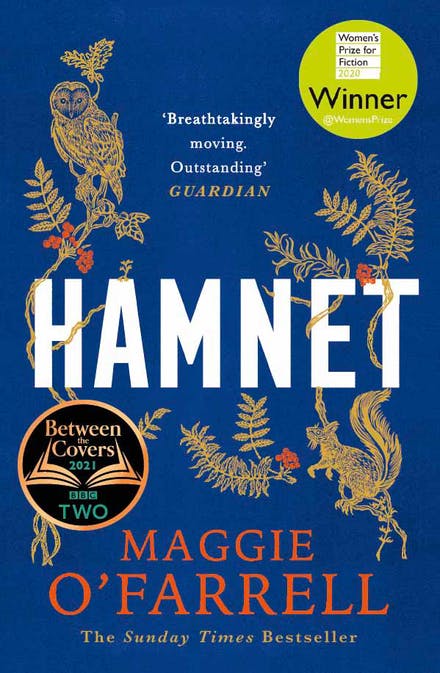
A truly wonderful feat of imagination, powerful and emotive in a way that few books and authors are able to manage. It is a justified award winner – the only thing keeping me from awarding five stars is that I like to have a little more plot in my reads, but I was still captivated.
My rating: ⭐⭐⭐⭐

 Stephen Reads Books